

Security cabinet okays 'dramatic' West Bank policy overhaul
Israel's security cabinet has approved a major overhaul of West Bank land and property policies, significantly expanding Israeli control and facilitating Jewish settlement expansion.
Defense Minister Israel Katz and Finance Minister Bezalel Smotrich announced the decisions, describing them as a “dramatic” shift to remove long-standing barriers.

The measures repeal a Jordanian-era law barring non-Muslims from purchasing real estate, allow direct private land purchases by Jews—previously restricted to registered companies—and make land registries public for the first time, enabling identification of owners and direct negotiations.
The changes eliminate the need for a special transaction license from the land-registration officer, replacing it with basic professional requirements.
Officials stated the new rules will:
"allow Jews to purchase land in Judea and Samaria just as they purchase [land] in Tel Aviv or Jerusalem.”
According to the Oslo II Accords signed in 1995 by Israel and the Palestinian Authority, the West Bank is divided into three areas, A, B and C.
Area A is under full Palestinian control, Area B is under Palestinian civilian control, Area C is under full Israeli control.

The new plan extends Israeli oversight enforcement activities into Palestinian-controlled Areas A and B for issues like water violations, archaeological damage, and environmental pollution affecting the broader territory. Authority over building permits in the Jewish settlement in Hebron, including at the Tomb of the Patriarchs compound (also known as the Ibrahimi Mosque), shifts from the Palestinian Authority-affiliated Hebron municipality to Israel's defense establishment.
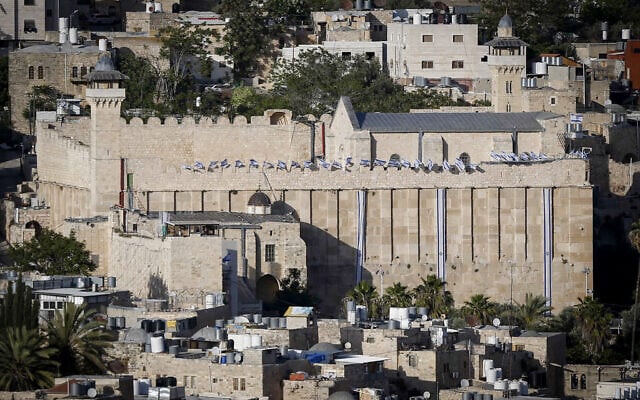
A dedicated municipal body will handle cleaning and maintenance at Rachel’s Tomb in Bethlehem.
Palestinian Authority President Mahmoud Abbas condemned the moves as illegal and invalid, calling for US and UN intervention to halt them and warning against infringements on Islamic and Christian holy sites.
The Yesha Council, representing West Bank settlements, hailed the decisions as entrenching Israeli sovereignty de facto, calling them among the most significant since 1967.