
Energy Dome's CO2 battery gains traction globally
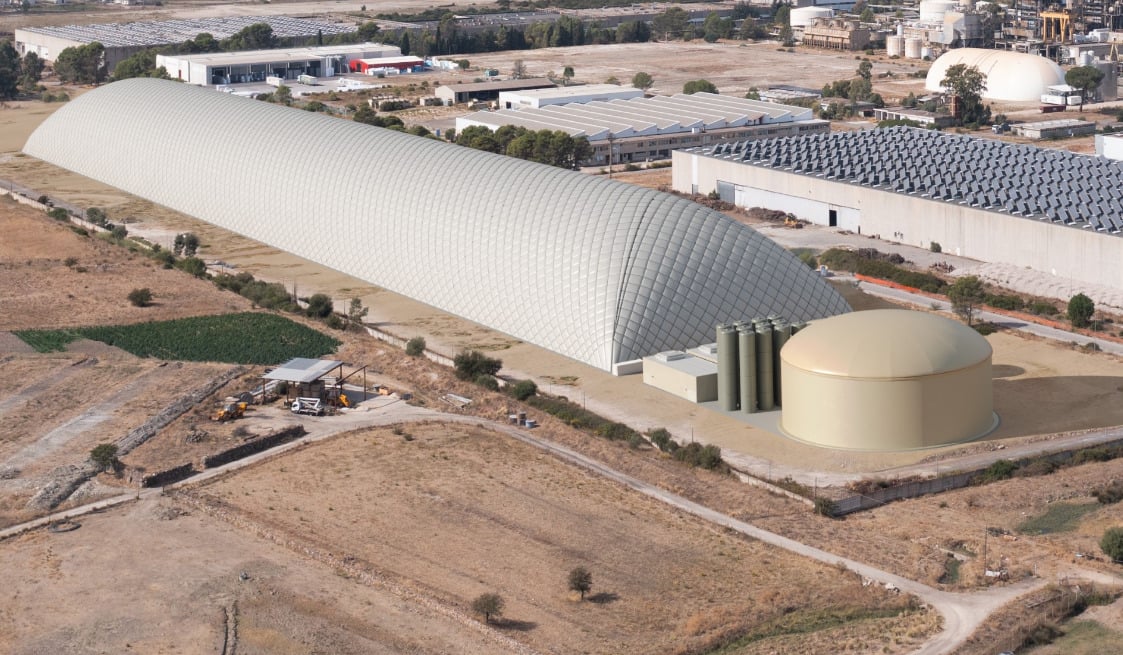
Energy Dome, a Milan-based company, has developed the "CO2 Battery," a novel long-duration energy storage system using a large inflatable dome to hold 2,000 tonnes of supplied carbon dioxide in a closed loop. The facility in Ottana, Sardinia—completed in July—compresses CO2 into liquid for storage during excess renewable energy periods and expands it through a turbine to generate electricity when needed.
It delivers 200 megawatt-hours, equivalent to 20 MW over 10 hours. This technology addresses the limitations of lithium-ion batteries, which typically provide only 4-8 hours of storage. Unlike pumped hydro, it requires no specific topography; unlike many batteries, it avoids critical minerals. Components use existing supply chains, with a projected lifetime three times longer than lithium-ion and costs 30 percent lower when scaled.
Deployment is rapid: the dome inflates in half a day, and full construction takes under two years on 5 hectares of flat land. Major adopters include NTPC Limited in India (planned for 2026 at Kudgi), Alliant Energy in Wisconsin (to power 18,000 homes starting 2026), and Chinese firms building a similar large-scale facility in Xinjiang. Google announced a July partnership—its first in long-duration storage—to deploy these facilities near data centers across Europe, the US, and Asia-Pacific for reliable clean power. “So standardization is really important, and this is one of the aspects that we really like” about Energy Dome, says Ainhoa Anda, Google's senior lead for energy strategy. “They can really plug and play this.”
The system prioritizes sites with high renewable potential and decarbonization impact. In case of dome puncture, released CO2 equals emissions from about 15 transatlantic flights—“negligible compared to the emissions of a coal plant,” notes CEO Claudio Spadacini.