

Living sensor display turns engineered skin into a biological monitor
Researchers in Japan have created a living sensor display that monitors internal biological states using engineered skin. Led by Tokyo City University and the University of Tokyo, the team developed a graft that fluoresces in response to inflammation markers.
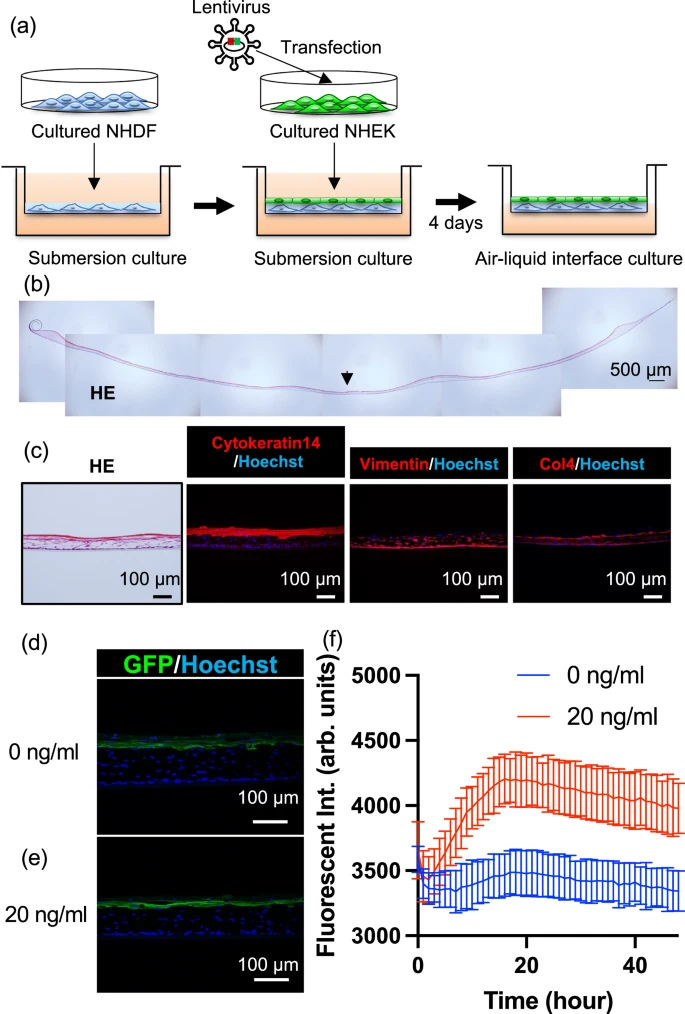
The researchers genetically engineered human epidermal keratinocyte stem cells (KSCs) — which naturally possess high sensitivity and selectivity to environmental stimuli — to express enhanced green fluorescent protein (EGFP) in response to specific biomarker signals.
They targeted the NF-kB pathway, which is activated by inflammatory cytokines. The engineered cells act as both sensor (detecting the biomarker via membrane receptors) and display (producing visible fluorescence), with signals amplified through natural cellular processes (transcription/translation).
This innovative system allows for long-term biomarker monitoring without blood sampling, using the body's natural skin regeneration.
Unlike traditional sensors, this system is maintained biologically by the body and has shown functionality for over 200 days.
Applications may extend to animal health care, providing early disease indicators. This approach bridges living tissues with sensing functions, merging biological systems with engineered devices.
