
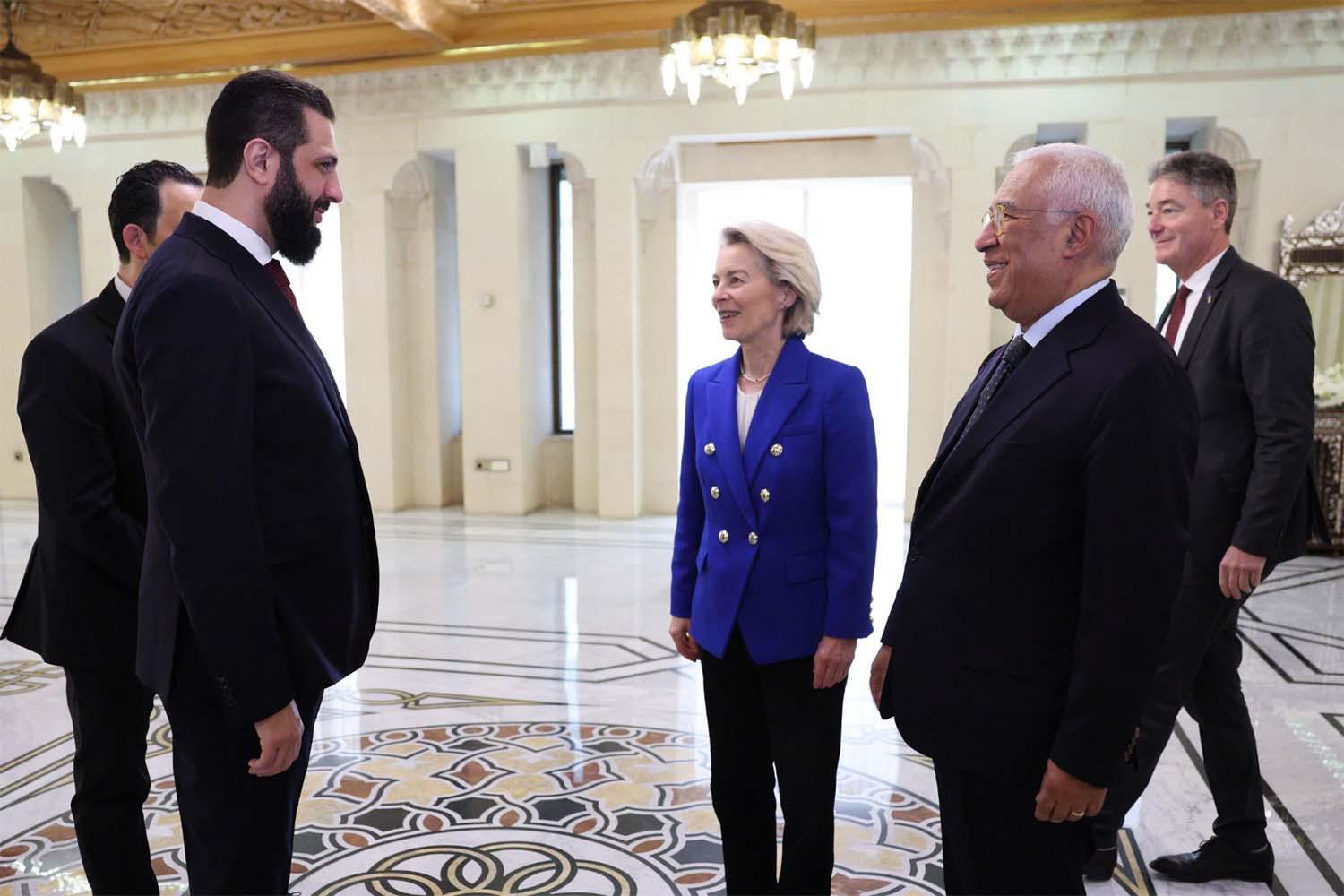
EU to restore Syria relations
The European Union is set to intensify relations with Syria through the restart of structured political dialogue and expanded economic and security cooperation, a confidential EU document reveals. Prepared by the bloc’s diplomatic service and distributed to member states this week, the paper confirms that the EU will reactivate its 1978 cooperation agreement in full and initiate a High-Level Political Dialogue with Syria’s transitional authorities on May 11.
As part of this shift, the EU will “reframe and adapt” its sanctions regime “to maintain leverage while engaging with Syria’s leadership and targeting spoilers of the transition.” Under interim President Ahmed al-Sharaa, who led Islamist rebel forces in overthrowing Bashar al-Assad at the end of 2024 after 14 years of war, Syria has already had most Western sanctions removed and is now seeking deeper international integration.
The document details plans for stronger economic links, including new arrangements for trade and investment, mobilisation of private funding, and creation of a technical assistance hub to help reform the business climate. It also commits the EU to supporting the “safe, voluntary and dignified return” of refugees and displaced persons. Over one million Syrian refugees and asylum seekers currently reside in Europe, approximately half of them in Germany.
Regionally, the EU aims to link Syria to major connectivity initiatives such as the India–Middle East–Europe Economic Corridor, capitalising on its strategic position for transport, energy, and digital networks. The country is already functioning as a transit hub, highlighted by the departure on Thursday of the first tanker carrying Iraqi oil from the port of Baniyas.
On security matters, the paper proposes EU assistance in training Syrian police, strengthening the interior ministry, and joint work on counterterrorism, drug trafficking, and organised crime. It further endorses implementation of a January agreement between Damascus and Kurdish-led authorities in the northeast. That deal focuses on integrating local institutions into national structures and broadening rights for Syrian Kurds. In March, Syria appointed the commander of the YPG Kurdish forces as deputy defense minister for the eastern territories.