
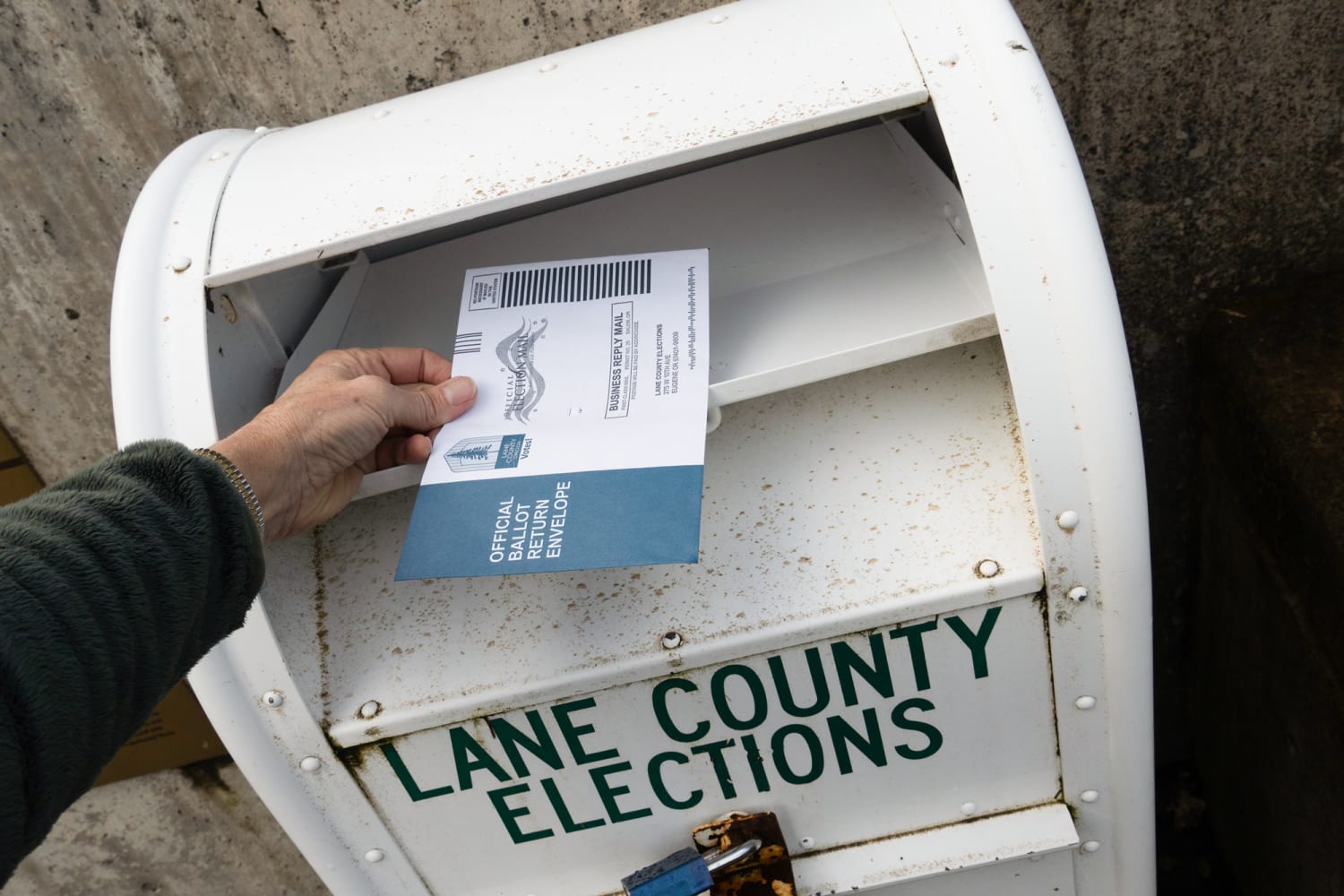
Supreme Court allows states to count mail-in ballots that arrive late
The Supreme Court ruled 5-4 on Monday that states may count absentee ballots that arrive after Election Day, provided they are postmarked on or before it, rejecting a challenge brought by the Republican National Committee.
In Watson v. Republican National Committee, the Court reversed a Fifth Circuit decision that had struck down a Mississippi law allowing absentee ballots to be counted if received up to five business days after the election. The RNC and Mississippi Republican Party had argued that federal statutes setting a uniform Election Day require ballots to be received, not merely cast, by that date.
Writing for the majority, Justice Amy Coney Barrett held that the federal election-day statutes regulate when voters must make their choice, not when ballots must be received. She reasoned that an "election" is the act of choosing a candidate, which is complete when voting ends. State law, she wrote, governs ballot-receipt deadlines.
Chief Justice John Roberts and the three liberal justices joined Barrett's opinion. Justice Samuel Alito dissented, joined by Justices Thomas, Gorsuch and, in part, Kavanaugh, arguing the ruling risks voter fraud and eroded confidence in elections.
The decision preserves similar ballot-receipt laws in roughly 30 states and the District of Columbia.