
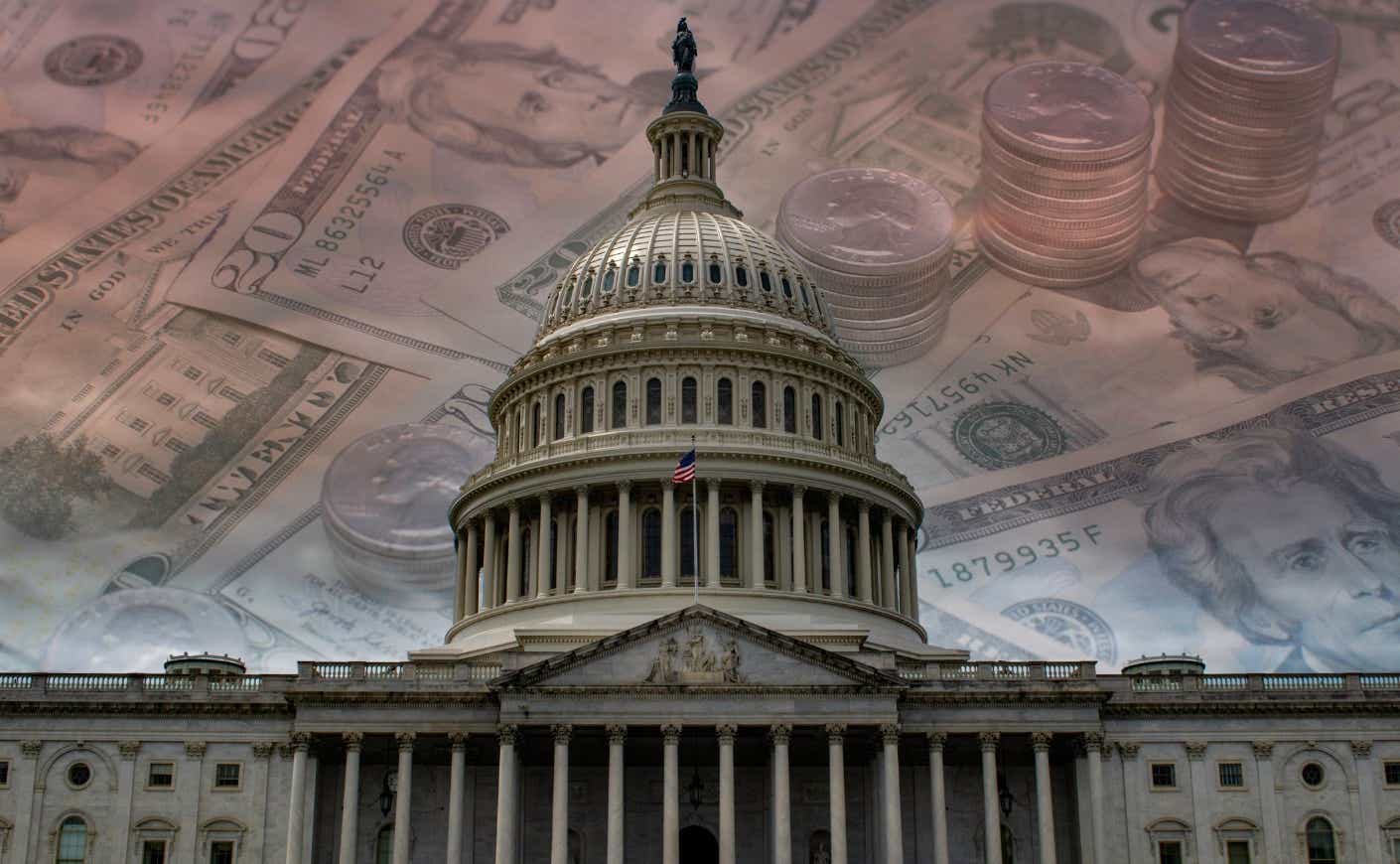
US national debt exceeds 100% of GDP
The U.S. national debt has officially surpassed 100 percent of gross domestic product, crossing a once-unthinkable threshold and heading toward the record set after World War II.
As of March 31, publicly held debt reached $31.265 trillion while GDP over the preceding year stood at $31.216 trillion, producing a debt-to-GDP ratio of 100.2 percent. The figure climbed from 99.5 percent at the end of the last fiscal year on September 30.
The federal government is spending $1.33 for every dollar it collects in revenue. Annual deficits are running near 6 percent of GDP and are projected at $1.9 trillion this year, little changed from 2025 as Republicans’ tax cuts take effect before spending cuts begin. These structural deficits will continue adding to the debt for the foreseeable future.
One in every seven dollars of federal spending now goes toward interest payments. A mere 0.1 percentage point rise in interest rates would add $379 billion in costs over the next decade.
The milestone marks a potent symbol of decades of fiscal stress. Lawmakers in both parties have expressed alarm but consistently prioritized tax cuts and spending increases with clearer short-term political benefits.
Economists warn the rising ratio consumes resources that could be used more productively elsewhere and makes the government more sensitive to interest rates. Without policy changes, the U.S. is headed toward debt levels already seen in France, Italy, Greece and Japan.
The Congressional Budget Office projects the ratio will reach 100.6 percent for the fiscal year ending September 30, exceed the post-World War II record of 106.1 percent by 2030, climb to 120 percent by 2036 and hit 175 percent by 2056 under current policies.
Cumulative deficits over the next decade are projected at $24 trillion. Stabilizing the ratio around 100 percent would require roughly $10 trillion in spending cuts and tax increases.